
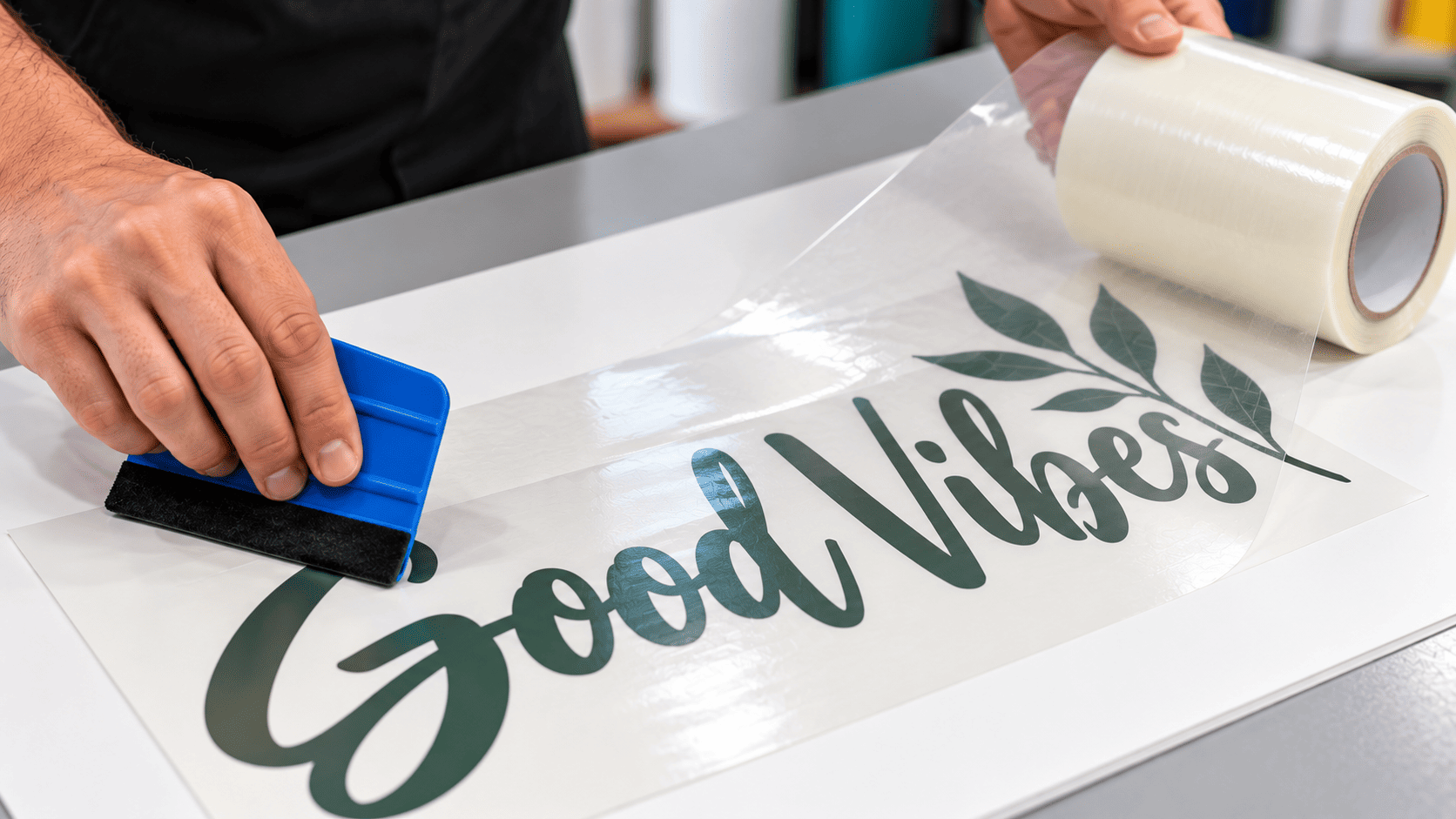
Vinyl decals can look perfect on the cutting table and still go wrong during application. Small issues such as trapped air, stretched vinyl or poor transfer can affect the final result.
- Choosing the wrong tape can make transfer difficult.
- Poor preparation can cause vinyl to lift or shift.
- Incorrect application pressure can create wrinkles or bubbles.
For signmakers and anyone working with decals, application tape for vinyl is a practical part of the process. In this guide, we explain how application tape works, how to choose it, and how to apply vinyl decals cleanly.
Application tape for vinyl temporarily holds cut vinyl graphics together while they are transferred from their backing paper to the final surface. Bi-wize supplies signmaking materials for applications where controlled transfer matters. The right tape, surface preparation and application technique help keep lettering and graphics correctly positioned.
What Does Application Tape Do?
Application tape holds the individual elements of a cut vinyl graphic in their intended position during transfer. Once the vinyl has been weeded, the tape picks up the finished design from its backing sheet so it can be placed onto glass, boards, walls, vehicles or other suitable surfaces.
The tape needs enough grip to lift the vinyl without bonding to it for good. That balance matters because:
- Low tack: May struggle to lift small lettering or intricate graphics
- Higher tack: Can make the tape harder to release once the decal is applied
- Correct tack: Holds the design securely and still lets you transfer it in a controlled way
The size and complexity of the decal also affect the choice. Small lettering, fine details and large graphics can each behave differently during transfer.
Get Better Results From Your Vinyl Decals
Application Tape vs Transfer Tape
The terms are often used interchangeably. In practical signmaking work, both refer to a material used to transfer a vinyl graphic while keeping its individual components aligned.
For example, transfer tape for vinyl signs is useful when a cut design contains multiple letters, shapes or separate elements that need to reach the substrate in the same arrangement as the original design.
How Do You Apply Vinyl Decals With Application Tape?
The process starts before the tape touches the vinyl. A clean surface, a properly weeded graphic and a suitable application method all affect the final result.
1. Weed the Vinyl Carefully
Peel away the vinyl you don’t want, both around and inside the design, so only the graphic you need stays on its backing sheet.
Take extra care with:
- Small lettering
- Thin lines
- The inside sections of letters
- Fine graphic details
If you pull the excess too fast, small pieces can lift off the backing.
2. Apply the Tape
Lay the application tape over the finished vinyl graphic, then press it down with a squeegee or another suitable tool.
Work across the graphic bit by bit instead of pressing it all at once. That way the tape sticks evenly to the whole design.
3. Transfer the Graphic
Flip the taped graphic over and carefully peel the backing paper away from the vinyl. If any parts stay stuck to the backing, lay it back down and press harder rather than forcing the vinyl off.
4. Position and Apply
Set the vinyl onto the prepared surface. Once it’s in the right spot, press down firmly and evenly across the whole graphic.
For larger graphics, controlling the position before full contact is particularly important. Once a large section has adhered, repositioning becomes much harder.
Which Application Tape Should You Choose?

There is no single tape that suits every vinyl job. The right choice depends on the vinyl, graphic detail, application surface and transfer requirements.
| Project factor | What to consider |
| Small lettering | A tape that picks up fine details without gripping too hard |
| Large graphics | Even contact and a controlled transfer |
| Intricate designs | Tape that holds each element in place |
| Smooth surfaces | Standard application techniques usually work well |
| Delicate vinyl | Go easy on the pressure during transfer |
A common mistake is choosing tape only by how strongly it grips the vinyl. Stronger adhesion doesn’t automatically mean a better transfer. The tape has to let go of the graphic cleanly once the decal is on its final surface.The tape needs to release the graphic cleanly when the decal reaches its final surface.
For customers looking for vinyl application tape in Australia, the important consideration is matching the tape to the vinyl and the application method rather than selecting purely by price.
What Surface Preparation Mistakes Affect Vinyl Transfer?
Surface preparation can determine whether a decal stays in place after application. Dust, grease, moisture and other contaminants can interfere with adhesion.
Before applying a decal:
- Clean the surface thoroughly.
- Remove dust and residue.
- Allow the surface to dry.
- Check that the substrate is suitable for the vinyl.
- Plan the graphic position before removing the backing.
Temperature can also affect how vinyl behaves. A decal that feels easy to handle in one environment may become more difficult to position in another.
Plan the Transfer Before Removing the Backing
For a simple decal, positioning may be straightforward. Larger graphics or designs with several alignment points need more planning.
Measure the application area first and mark reference points where appropriate. This reduces the need to reposition the graphic after it has made contact with the surface.
What Are the Most Common Application Tape Problems?

Most transfer problems can be traced back to the tape, vinyl, surface or application technique rather than the graphic itself.
The Vinyl Will Not Lift From the Backing
The tape may not have made enough contact with the vinyl. Apply additional squeegee pressure and try separating the backing gradually.
Small Letters Stay Behind
Fine lettering needs steady pressure and a tape with the right amount of grip. If you pull hard, delicate characters can come away from the rest of the graphic.
The Vinyl Sticks Too Strongly to the Tape
This can happen when the tape grips harder than that particular vinyl needs. Go slowly and keep the graphic supported as you peel, which makes the transfer easier.
Bubbles Appear During Application
Bubbles usually come from trapped air, uneven pressure or working too fast. Using a squeegee and working across the graphic bit by bit gives you more control.
The Graphic Moves Out of Position
Large or detailed graphics should be positioned carefully before the vinyl contacts the final surface. Taking measurements beforehand can prevent costly repositioning.
Choose The Right Application Tape For Your Decals
How Can You Get Better Results With Vinyl Decals?
Good results come from treating the transfer as part of the overall vinyl application process rather than as a separate step.
Keep these points in mind:
- Match the tape to the vinyl and graphic.
- Weed carefully around fine details.
- Keep the application surface clean and dry.
- Use consistent squeegee pressure.
- Plan positioning before the decal touches the surface.
- Work slowly with large or detailed graphics.
- Avoid stretching the vinyl during transfer.
Bi-wize supports signmaking requirements with application materials and practical product knowledge, helping customers select suitable materials for their projects.
Conclusion
Using the right application tape makes the transfer stage easier to control, especially when a decal has small lettering, fine detail or several separate elements. The best results come from matching the tape to the vinyl, preparing the surface properly and pressing evenly the whole way through the transfer.
For signmakers working with vinyl graphics, Bi-wize can supply the application materials needed to prepare and install decals reliably. Choosing the right material at the start can save time and head off problems during application.
FAQs
Can application tape be reused?
Application tape is generally meant for one transfer. Its stickiness and its ability to hold the design can change after use, so reusing it can make the next transfer less reliable.
Should you use wet application with vinyl decals?
It depends on the vinyl, the surface and the application method. Some jobs do better with wet application and others suit dry application. Always follow the recommendations for the specific vinyl you’re using.
How long can vinyl stay on application tape?
Don’t leave a finished graphic on the tape for longer than you need to. Storage conditions, temperature and the materials involved can all change how easily the vinyl separates from the tape.
Does application tape work with all vinyl?
No. Vinyl products differ in surface finish, thickness and adhesive. Check compatibility before starting a large or detailed project.