
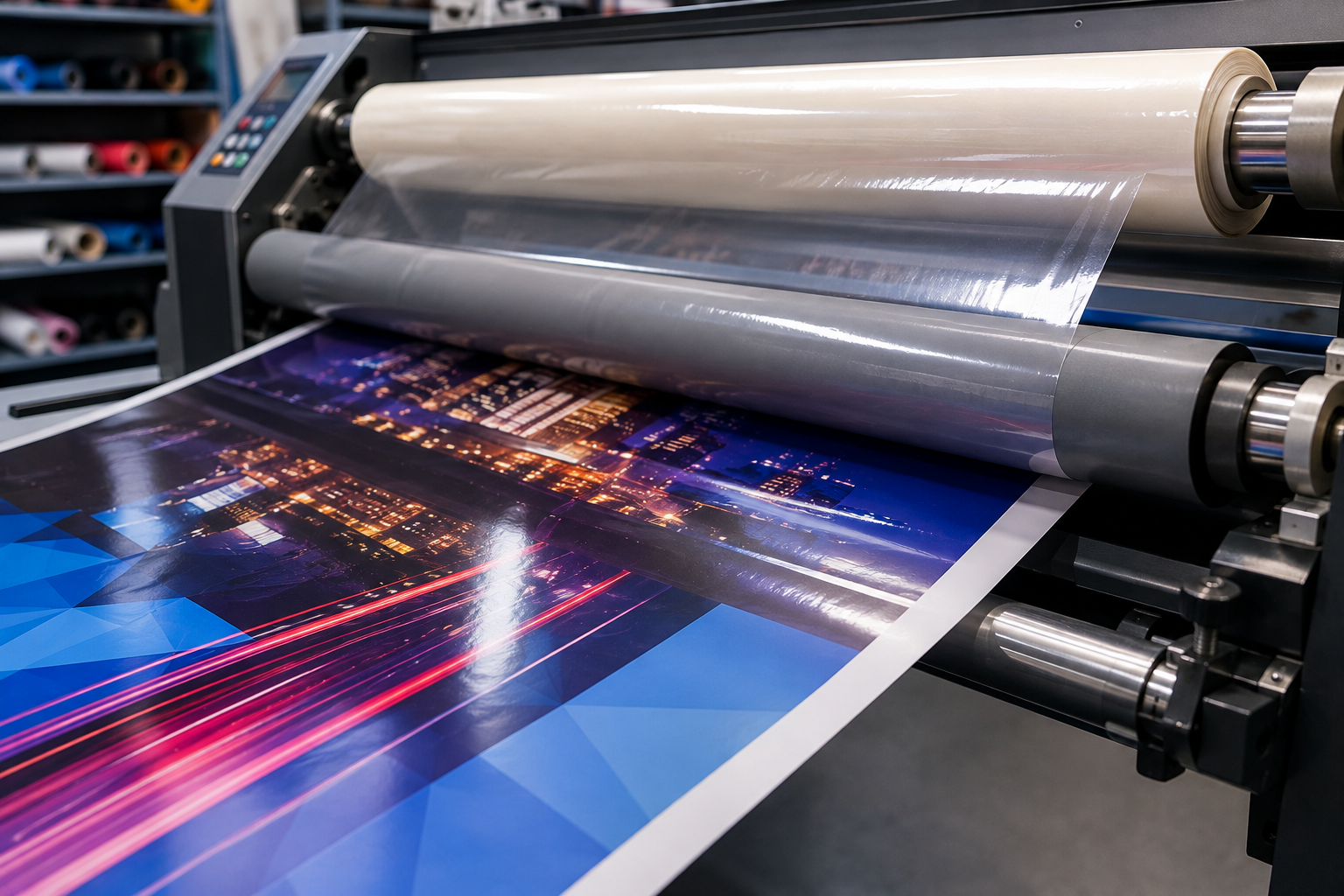
Selecting the right laminate can greatly impact how printed graphics look, perform, and hold up over time. Incorrect finish or construction may lead to premature wear, reduced visual quality or an unsuitable result for the application.
Signmakers need to consider more than gloss or matte when selecting a laminate. The right choice depends on the substrate, exposure, handling, installation method and anticipated lifespan.
Bi-Wize has been in the business of supplying the sign and print industry for decades and we understand the practicalities involved in making the right choice of compatible materials. This guide will teach you how to match laminate for vinyl signs to the application, environment and desired finish.
Focus: How to choose laminate according to the graphic, surface, environment and expected lifespan.
Key Considerations: Finish, UV exposure, abrasion, moisture, flexibility and compatibility with the printed material .
Professional Insight: Bi-Wize suggests you consider the laminate as part of the total graphics system, not as a separate finishing step.
Practical Result: Better protection, uniform appearance and finish appropriate to the way the graphic will actually be used.
Why Does Printed Vinyl Need To Be Laminated?
Lamination provides a protective layer over printed vinyl and helps to protect the graphic from abrasion, handling, moisture and environmental exposure. It can also affect the final appearance by altering surface reflectivity and texture.
The correct laminate has to be selected according to the conditions the graphic will be subjected to. Graphics for interior walls in a controlled environment are very different from vehicle graphics that are exposed to sunlight, road contaminants and regular cleaning.
Some the common reasons for laminating are:
- To guard printed surfaces from scuffing and scratching.
- Offering a selected gloss, satin or matt finish.
- Help to preserve colour and visual quality during exposure.
- Improving suitability for applications with routine handling.
Adding protection where cleaning or environmental exposure is anticipated. A practical point often overlooked is compatibility.
The laminate, ink, vinyl and application environment should function as a system. Even a high-performance laminate won’t make up for an inappropriate base material or a poor surface preparation.
Choose The Right Laminate For Your Graphics
How Do You Choose Between Gloss And Matte Laminate?
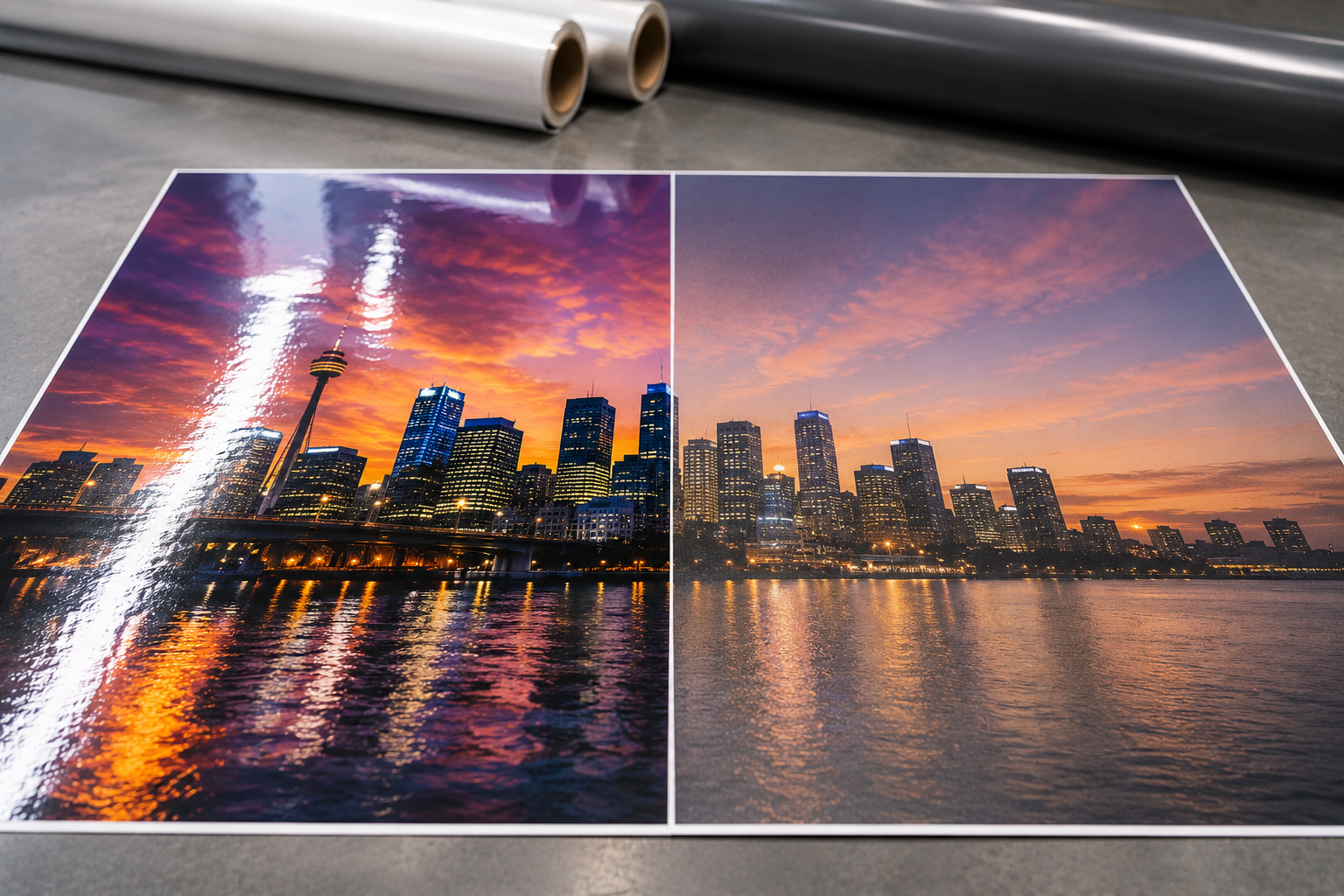
The choice between gloss and matte should depend on where the graphic will be viewed and how it will be used. Gloss provides a more luminous, lustrous look, while matte decreases reflections and results in a softer visual appearance.
When deciding between gloss and matte laminate vinyl, think about the viewing environment rather than just how it looks.
| Finish | Best Suited To | Key Consideration |
| Gloss | Vibrant graphics, promotional displays and applications where strong colour impact is important. | Can produce more visible reflections under direct lighting. |
| Matte | Professional displays, interior graphics and areas where glare may be distracting. | Creates a softer appearance and can alter perceived colour depth. |
For graphics installed near windows, bright lighting or reflective surfaces, glare can affect readability even when the print itself is high quality. Viewing conditions should therefore form part of the specification from the beginning.
What Type Of Laminate Is Best For Outdoor Signs?
Outdoor graphics generally require a laminate designed to withstand environmental exposure, particularly sunlight, moisture and regular handling. The correct specification depends on the expected exposure and lifespan of the finished graphic.
An overlaminate for outdoor signs should be matched to the underlying vinyl and printing system. Outdoor applications may include building signage, promotional graphics, external displays and other installations exposed to changing weather conditions.
The most important factors include:
- UV exposure and expected colour retention.
- Moisture and temperature changes.
- Surface wear and cleaning requirements.
- Flexibility required during installation.
- Expected service life.
A common mistake is selecting a laminate based only on the graphic’s location. A shaded outdoor sign and a vehicle parked in direct sunlight experience very different conditions. Exposure, movement and cleaning should all be considered before specification.
When Should You Use A Laminate For Vehicle Graphics?
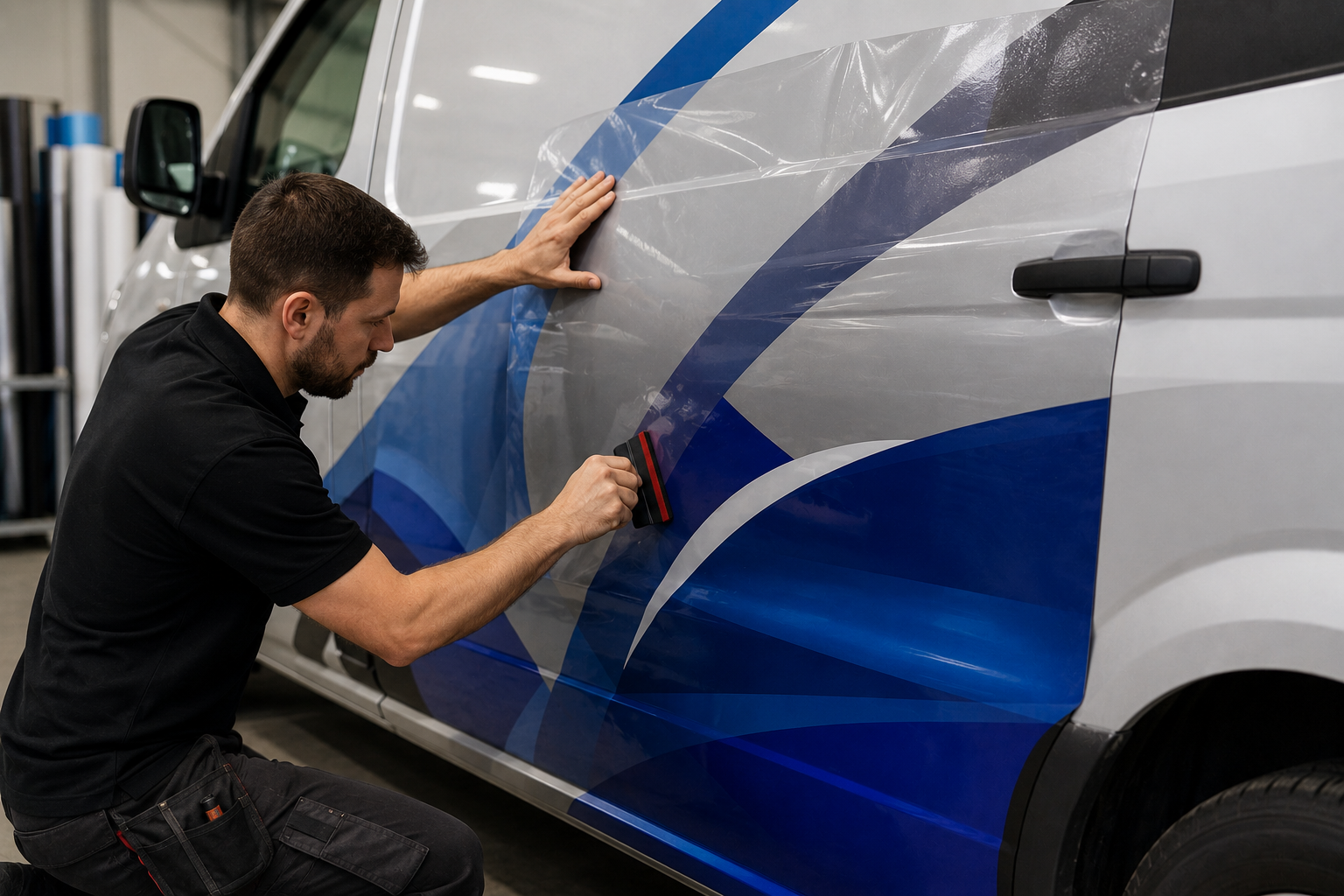
Vehicle graphics require careful laminate selection because the finished surface must cope with movement, washing, environmental exposure and regular contact. The laminate needs to work with the vinyl and remain suitable for the contours and application method involved.
For vehicle applications, UV laminate for vehicle graphics in Australia can provide an additional protective layer where prolonged outdoor exposure is expected. The appropriate product should still be checked for compatibility with the specific vinyl, ink system and intended application.
Vehicle graphics also present a practical issue that indoor signage does not: installation and post-installation movement. A laminate that performs well on a rigid, flat graphic may not necessarily be suitable where the finished material needs to conform around curves or contours.
The finish can also influence maintenance. A smoother surface may be easier to clean, while the visual effect of gloss or matte should be considered against the vehicle’s existing finish.
Are Self Laminating Sheets Suitable For Every Sign Application?
Self laminating sheets are great for smaller, simpler applications where convenience and controlled protection are important. They are especially useful when a graphic does not require the production process of the larger roll-based laminating systems.
However, they are not to be seen as a universal solution by default. Self laminating sheets signs might be suitable for some small format work, but bigger graphics or challenging outdoor jobs may require a specially chosen overlaminate.
What matters is how it will be used when it’s finished. Make sure to enquire:
- How big is the image?
- Where is it going to be set up?
- Is it subject to UV or moisture?
- Will it need to be cleaned often?
- Does the material need to conform around curves?
This application-first approach mitigates the risk of choosing a convenient material that does not match the real working conditions.
What Should You Check Before Buying Laminate?
Before purchasing laminate, consider compatibility, intended use and physical requirements rather than solely price or appearance.
A practical specification checklist includes:
| Factor | What To Check |
| Printed Material | Confirm laminate compatibility with the vinyl and ink system. |
| Environment | Identify indoor, outdoor, vehicle or high exposure conditions. |
| Finish | Decide whether gloss, matte or another finish suits the viewing environment. |
| Durability | Match protection requirements to expected use and lifespan. |
| Flexibility | Check whether the laminate needs to conform around curves or contours. |
| Handling | Consider cleaning, abrasion and regular contact. |
| Application | Ensure the laminate suits the planned finishing and installation process. |
One useful production insight is to consider the complete workflow before ordering. If a job involves printing, laminating, cutting and installation, material compatibility can affect every later stage. A laminate that is difficult to handle or unsuitable for the finishing process can create avoidable production delays.
Bi-Wize has supplied materials and equipment to the sign and print industry since 1969, giving businesses access to practical product knowledge alongside a broad range of signmaking materials.
How Can You Match Laminate To The Final Application?
The simplest approach is to start with the final environment and work backwards. Identify what the graphic will face, how long it needs to perform and what appearance the finished surface should have.
For example:
- Indoor promotional graphics: Take into account appearance & handling needs.
- Outdoor signs: Consider environmental and UV exposure requirements.
- Vehicle graphics: Flexibility, movement, cleaning and prolonged outdoor exposure.
- Graphics for high-contact: Emphasise abrasion and surface protection more.
- Applications to small formats: Check-sheet type protection feasibility.
This approach avoids over-specifying materials where they are not needed and lessens the risk of under-specifying protection for demanding applications.
Get The Right Finish For Your Signage
Conclusion
When choosing a laminate, the printed material, installation environment, finish, exposure and expected service life need to be considered. The best laminate for vinyl signs is therefore determined by the application rather than by appearance or price alone.
Bi-Wize has been supplying the sign and print industry since 1969, supporting businesses with practical knowledge across signage materials and related equipment. Whether you need help matching a laminate to a particular graphic or understanding which specification suits your application, Bi-Wize can help you make a more informed material choice. Get in touch with the team to discuss your requirements.
FAQs
Will lamination change the colour of printed graphics?
Yes, the surface finish can affect the appearance of printed colours. Gloss can make colours appear brighter and more saturated, while matte has a softer visual impression. It makes sense to check the printed material with the selected laminate for colour critical work before a bigger production run is completed.
Can you laminate printed vinyl immediately?
The waiting times are dependent on the printing technology, ink system and recommendations of the manufacturer. Some printed graphics may need to be adequately dried or cured before lamination. Following the relevant technical specifications helps to reduce problems such as adhesion problems, bubbling or surface defects .
Does every printed vinyl graphic require lamination?
No. Lamination is application dependent. Some indoor graphics that require little handline or are used for a short time may not need additional protection. When the material system permits, a suitable protective layer is often useful for graphics subject to UV, abrasion, moisture, cleaning or frequent touch.
Can I use the same laminate for indoor and outdoor graphics?
Not necessarily. Graphics used indoors and outdoors are exposed to vastly different environments. Higher resistance to UV exposure, moisture and temperature changes may be necessary for outdoor applications, while appearance, glare and handling may be more critical for indoor applications. The selection of the laminate should therefore be dictated by the requirements of the finished application.